Kaga
| <span title="Kaga (< 23.01.2019)" class="commentDrop" height="22">[[File:Kaga (< 23.01.2019)_icon_small.png|link=]]</span> | |||||||||||
Purchase price9700 
|
| Hit Points51 000 |
| 127 mm/40 Type89 A16 х 2 pcs. |
| Firing Range4.5 km. |
| Rate of Fire12 shots/min. |
| Reload Time5 sec. |
| HE Shell127 mm HE Type0 |
| Maximum HE Shell Damage2100 |
| Initial HE Shell Velocity725 m./s. |
| Chance of Fire on Target Caused by HE Shel8 % |
| 200 mm/50 3rd Year Type mod. A10 х 1 pcs. |
| Firing Range4.5 km. |
| Rate of Fire4 shots/min. |
| Reload Time15 sec. |
| AP Shell200 mm AP Type5 |
| Maximum AP Shell Damage4500 |
| Initial AP Shell Velocity870 m./s. |
| 127 mm/40 Type89 A1 mod. 22 х 2 pcs. |
| Firing Range4.5 km. |
| Rate of Fire10 shots/min. |
| Reload Time6 sec. |
| HE Shell127 mm HE Type0 |
| Maximum HE Shell Damage2100 |
| Initial HE Shell Velocity725 m./s. |
| Chance of Fire on Target Caused by HE Shel8 % |
| 25 mm/60 Type96 Twin mod. 114 х 2 pcs. |
| . . . Average Damage per Second70 |
| . . . Firing Range3.09 km. |
| 127 mm/40 Type89 A16 х 2 pcs. |
| . . . Average Damage per Second60.6 |
| . . . Firing Range5.01 km. |
| 127 mm/40 Type89 A1 mod. 22 х 2 pcs. |
| . . . Average Damage per Second20.2 |
| . . . Firing Range5.01 km. |
| Maximum Speed28 knot |
| Turning Circle Radius1 080 m. |
| Rudder Shift Time14.4 sec. |
| Surface Detectability Range12.6 km. |
| Air Detectability Range13.62 km. |
| <span title="Kaga (< 23.01.2019)" class="commentDrop" height="22">[[File:Kaga (< 23.01.2019)_icon_small.png|link=]]</span> | |||||||||||
| Purchase price9700
|
| Hit Points51 000 |
| 127 mm/40 Type89 A16 х 2 pcs. |
| Firing Range4.5 km. |
| Rate of Fire12 shots/min. |
| Reload Time5 sec. |
| HE Shell127 mm HE Type0 |
| Maximum HE Shell Damage2100 |
| Initial HE Shell Velocity725 m./s. |
| Chance of Fire on Target Caused by HE Shel8 % |
| 200 mm/50 3rd Year Type mod. A10 х 1 pcs. |
| Firing Range4.5 km. |
| Rate of Fire4 shots/min. |
| Reload Time15 sec. |
| AP Shell200 mm AP Type5 |
| Maximum AP Shell Damage4500 |
| Initial AP Shell Velocity870 m./s. |
| 127 mm/40 Type89 A1 mod. 22 х 2 pcs. |
| Firing Range4.5 km. |
| Rate of Fire10 shots/min. |
| Reload Time6 sec. |
| HE Shell127 mm HE Type0 |
| Maximum HE Shell Damage2100 |
| Initial HE Shell Velocity725 m./s. |
| Chance of Fire on Target Caused by HE Shel8 % |
| 25 mm/60 Type96 Twin mod. 114 х 2 pcs. |
| . . . Average Damage per Second70 |
| . . . Firing Range3.09 km. |
| 127 mm/40 Type89 A16 х 2 pcs. |
| . . . Average Damage per Second60.6 |
| . . . Firing Range5.01 km. |
| 127 mm/40 Type89 A1 mod. 22 х 2 pcs. |
| . . . Average Damage per Second20.2 |
| . . . Firing Range5.01 km. |
| Maximum Speed28 knot |
| Turning Circle Radius1 080 m. |
| Rudder Shift Time14.4 sec. |
| Surface Detectability Range12.6 km. |
| Air Detectability Range13.62 km. |

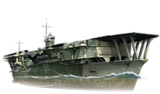
[[Ship:Kaga (< 23.01.2019)|Kaga (< 23.01.2019)]] — Japanese Tier VII aircraft сarrier.
Until the early 1940s, she was one of the biggest aircraft carriers of the Imperial Japanese Navy. Initially laid down as a battleship, she was redesigned during construction to become a carrier. The ship had good armor protection for her type, carried quite numerous air group and powerful secondary battery guns.
Kaga first went on sale on 5 June 2017 on the NA servers, and on 2 June 2017 on the EU servers.
Modules
 |
Hit Points (HP) | Armor (mm) | Armor (mm) | Main Turrets (pcs.) | Secondary Gun Turrets (pcs.) | AA Mounts (pcs.) | Torpedo Tubes (pcs.) | Hangar Capacity (pcs.) |
Research price (exp) |
Purchase price ( ) | |
|---|---|---|---|---|---|---|---|---|---|---|---|
| Kaga | 51 000 | 1 | 152 | 2/6/10 | 14/2/6 | 0 | 0 |
 |
Cruise Speed (knot) | Average Damage per Second (HP/min) | Loadout | Hit Points (HP) |
Research price (exp) |
Purchase price ( ) | |
|---|---|---|---|---|---|---|---|
| Mitsubishi A6M2 | 144 | 1330 | 0 | 0 |
 |
Maximum Torpedo Damage (HP) | Cruise Speed (knot) | Hit Points (HP) |
Research price (exp) |
Purchase price ( ) | |
|---|---|---|---|---|---|---|
| Nakajima B5N2 | 8567 | 129 | 12 | 0 | 0 |
 |
Maximum Bomb Damage (HP) | Cruise Speed (knot) | Hit Points (HP) |
Research price (exp) |
Purchase price ( ) | |
|---|---|---|---|---|---|---|
| Aichi D3A1 | 129 | 12 | 0 | 0 |
 |
Maximum Speed (knot) |
Research price (exp) |
Purchase price ( ) | |
|---|---|---|---|---|
| Propulsión: 125 000 CV | 28 | 0 | 0 |
Compatible Upgrades
Player Opinion
Performance
Kaga is a tier VII Premium Japanese Aircraft Carrier. Unlike Saipan's style of having fewer, higher tier aircraft, Kaga instead allows the player to use large numbers of lower tier aircraft. She is able to send large numbers of bombers at the enemy, but must be careful of the anti-aircraft abilities of same and higher-tier ships. Her planes are also slower than other Aircraft Carriers at her tier, meaning they are unable to outrun enemy aircraft, and will spend more time in anti-aicraft auras. However, Kaga features powerful plane loadouts that allow her to punish anything that has inadequate AA, or has had its AA reduced over the course of the battle. The primary loadout is a 2/2/1 setup, providing powerful offensive power in the form of her six-plane torpedo squadrons, and two fighter squadrons to tie up the enemy fighters and protect the strike. Kaga's fighters can hold their own if the player takes the Dogfighting Expert captain skill and mounts the other fighter enhancement modules as well. Kaga also has 20.3cm secondary guns, but as they are secondaries, they are short range and relatively inaccurate, making them more for entertainment value than actual combat.
LittleWhiteMouse's Premium Ship Review: Kaga from the NA forums.
Pros:
- Has the largest hangar size of any Tier VII aircraft carrier at 85 planes.
- Kaga carries a powerful secondary armament consisting of several 127mm and 200mm guns.
- Has the largest number of hit points of any carrier at her tier.
- The ship has a 22% torpedo protection damage reduction.
- The drop pattern of her torpedo squadrons can be difficult to dodge, especially for larger ships.
Cons:
- Travelling at a speed of 28 knots, Kaga is somewhat slow in comparison to her counterparts.
- Kaga is also hard to maneuver. The ship has a rudder shift time of 14.4 seconds and a turning circle radius of 1080m.
- Kaga’s Tier VI planes can be fragile against higher tier anti-aircraft or other aircraft.
- The strike aircraft are slow, especially in comparison to Saipan's or Ranger's aircraft.
- The fighter squadrons contain only four planes instead of the six that the dive bomber and torpedo bomber squadrons have.
Research
Optimal Configuration
Upgrades
As a Tier VII carrier with four upgrade slots, the following upgrades are recommended on Kaga:
Slot 1
- Air Groups Modification 1, in order to improve the fighters' damage capabilities and increase their chances of winning dogfights.
Slot 2
- Air Groups Modification 2, in order to further improve the fighters' chances of winning dogfights through increasing their survivability.
Slot 4
- Damage Control System Modification 1 is the top pick of the bunch, in order to reduce fire and flooding chance on the ship (as carriers rarely have their engine or rudder incapacitated).
Slot 5
- Propulsion Modification 2, so that captains can quickly relocate their ship if any potential threat is approaching quickly.
Commander Skills
Recommended Commander Skills 
| ||||||||
|---|---|---|---|---|---|---|---|---|
| Cost (points) |
Endurance | Attack | Support | Versatility | ||||
| 1 |
 Priority Target
|
 Preventative Maintenance
|
 Expert Loader
|
 Aircraft Servicing Expert ★★★ |
 Direction Center for Catapult Aircraft
|
 Dogfighting Expert ★★ |
 Incoming Fire Alert
|
 Evasive Maneuver ★ |
| 2 |
 High Alert ★ |
 Jack of All Trades ★ |
 Expert Marksman
|
 Torpedo Acceleration ★★★ |
 Smoke Screen Expert
|
 Expert Rear Gunner ★ |
 Adrenaline Rush
|
 Last Stand
|
| 3 |
 Basics of Survivability
|
 Survivability Expert
|
 Torpedo Armament Expertise ★★★ |
 Emergency Takeoff ★ |
 Basic Firing Training ★★ |
 Superintendent
|
 Demolition Expert
|
 Vigilance
|
| 4 |
 Manual Fire Control for Secondary Armament ★ |
 Fire Prevention
|
 Inertia Fuse for HE Shells
|
 Air Supremacy ★★★ |
 Advanced Firing Training ★★ |
 Manual Fire Control for AA Armament ★★ |
 Radio Position Finding
|
 Concealment Expert ★★ |
| Key: ★★★ - Extremely Useful ★★ - Frequently Useful ★ - Occasionally Useful No stars - Not Useful | ||||||||
Consumables
As a carrier at Tier VII, Kaga has access to only Damage Control Party. Due to Kaga’s poor concealment, the premium version of this consumable is recommended in case enemy surface ships decide to focus fire on her with high explosive rounds.
Camouflage
As a premium ship, Kaga comes included with Type 10 camouflage that lowers her detection radius, reduces the accuracy of incoming shells, and increases the amount of experience she earns.
Signals
As a carrier, Kaga is able to mount a maximum of four signal flags simultaneously. Mounting a November Echo Setteseven is recommended to improve the ship's anti-aircraft defenses as well as her aircraft’s rear gunner damage. Juliet Whiskey Unaone flags may also be mounted to improve the flooding chance for the torpedo bombers. India Yankee and Juliet Yankee Bissotwo flags are also recommended to decrease time of fire and flooding recovery respectively. Lastly, economic flags such as Equal Speed Charlie London, Zulu, and Zulu Hotel can be mounted to improve credit or experience gain per battle.
Recommended Signal Flags 
| |||||
|---|---|---|---|---|---|
| Combat | |||||
 November Echo Setteseven ★★★ |
 Mike Yankee Soxisix ★ |
 India X-Ray ★★ |
 Juliet Whiskey Unaone ★★★ |
 Victor Lima ★★ |
 Hotel Yankee
|
 November Foxtrot ★★ |
 Sierra Mike ★ |
 India Delta
|
 Juliet Yankee Bissotwo ★ |
 India Yankee ★★ |
 Juliet Charlie
|
| Economic | |||||
 Zulu ★★ |
 India Bravo Terrathree ★ |
 Equal Speed Charlie London ★★★ |
 Zulu Hotel ★★ |
 Papa Papa ★ | |
| Special | |||||
 Wyvern
|
 Red Dragon
|
 Dragon Flag ★★ |
 Ouroboros
|
 Hydra
| |
| Key: ★★★ - Extremely Useful ★★ - Frequently Useful ★ - Occasionally Useful No stars - Not Useful | |||||
Gallery
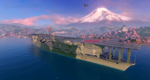
Kaga as seen in port.
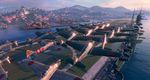
Closeup of Kaga's air group.
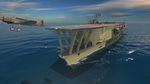
Kaga launches a B5N torpedo bomber.
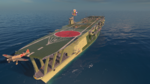
Kaga launches an A6M fighter.
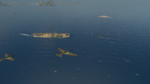
A squadron of B5N fly-over Kaga.
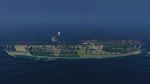
Portside outboard profile of Kaga.
A furball erupts as Kaga attempts to strike an enemy Ranger.
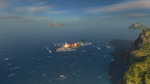
Kaga's torpedo bombers finish the job.


Historical Info
Kaga, 1935
Construction
- Builder: Kawasaki Heavy Industries, Kobe, Japan
- Laid down: 19 July 1920
- Launched: 17 November 1921
- Builder: Yokosuka Naval Arsenal, Yokosuka, Japan
- Reclassified: 21 November 1923
- Completed: 31 March 1928
- Commissioned: 1 November 1929
Specifications
- 38,200 tons displacement, standard
- 247.8m length
- 32.5m beam
- 9.48m draft
Machinery
- 8 oil-fired boilers, 4 multi-stage geared turbines
- 5,300 tons of fuel oil
Performance
- 28 knots at 127,400 shaft horsepower
- 10,000 nautical miles at 15 knots
Armor
- Main Belt: 120-152mm
- Flight Deck: 38mm
- Torpedo Bulges: 19mm
- Casemates: 25mm
- Hangar: 16mm
Armament
Main
- Ten (10 x 1) 20cm/50 3rd Year Type naval gun
Secondary
- Sixteen (8 x 2) 127mm Type 89 DP guns
Anti-Aircraft
- Twenty-two (11 x 2) 25mm Type 96 AA guns
Aircraft
Total
- 90 Aircraft (72 standard + 18 reserve)
Fighters
- 21 Mitsubishi A6M
Torpedo Bombers
- 27 Nakajima B5N
Dive Bombers
- 27 Aichi D3
Complement
- 2,019 men

Design
Kaga was originally conceived as a Tosa-class battleship, the would-be successors to the Nagato-class of battleships. Their fate would be altered due to the forthcoming Washington Naval Treaty of 1922; all major naval powers decided to adhere to a moratorium on battleship construction. Kaga’s fate was sealed: she would be scrapped. In the treaty’s wake, the Japanese sought to convert two of their incomplete Amagi-class battlecruisers – Amagi and Akagi – into aircraft carriers as the treaty allowed two capital ship hulls above 30,000 tons to undergo conversion. In a twist of fate, Amagi was damaged during the 1923 Tokyo earthquake and Kaga received a new lease on life; substituted in the former’s place for conversion work.
Unlike her predecessor – Akagi – Kaga was based on a battleship hull. A larger beam, a smaller length, and outdated machinery resulted in below average speeds for a fleet carrier; Kaga – at 27 knots – was the slowest of the Kidō Butai. Regardless of such differences, Kaga was still a suitable replacement, as she possessed the same general layout as the Amagi-class battlecruisers.
As originally built, Kaga implemented a multi flight-deck construction in the hopes that this would speed up the aircraft launch-recovery cycle by allowing both actions simultaneously. Each deck fulfilled a specific purpose: the top flight deck was for recovery (the only “full-length” deck) where as the middle and lower flight decks were for launching aircraft only. As such, only the top flight deck possessed landing lights and arresting gear whilst the two lower decks were fed directly from the two superimposed main hangars. Over time – as aircraft became heavier and required longer takeoff rolls – the usage of the two, short launch decks became dubious at best.
The correct ejection of exhaust gases was still an on-going challenge and fleet carriers like Akagi and Kaga were still utilizing experimental systems. Originally built, Kaga collected exhaust in a pair of horizontal ducts positioned on the sides of the vessel and expelled the gases to the rear. The idea itself had merit, this way there was as little physical obstruction as possible on the flight deck for the landing aircraft. To no-one’s surprise, the hot gases were a constant nuisance to pilots as it would interfere with the landing approach; Kaga herself was too-slow to “out-run” the hot exhaust and the gases would linger around the top flight deck. Not to mention that the exhaust system was near living quarters and made accommodations rather unbearable.
Kaga ’s battleship pedigree was seen through her retention of a main armaments battery. In her original configuration she possessed ten 20cm Type 3 rifles: four in twin-gun turrets flanking the middle flight deck forward, and six in single casemate mounts aft. The Type B turret mounts were unique to Kaga and Akagi that they could elevate to +70˚ to combat aircraft, in theory. The casemates themselves saw limited practicality as they had limited elevation and traverse. Such firepower was added in the belief that carriers should have the autonomous ability to repel surface threats. Additionally, she was armed with twelve 120mm Type 10 guns in six twin-mounts in sponsons off the side. They were hampered by restricted firing angles due to their position.
In 1934, Kaga underwent a massive reconstruction in the hopes to solve many of her glaring deficiencies. The impractical multi flight-deck configuration was removed and instead the top flight deck was rebuilt to span the entire length of the ship. Concurrently, the hangers were extended and she received a third elevator situated to the front. As well, an island superstructure was added to the starboard side of the flight deck. In hopes to increase speed, 4 multi-staged turbines and 8 oil-fired boilers replaced her original 4 single-stage turbines and 12 mixed-fuel boilers; this increased power by over 30,000 shaft horsepower. But due to the addition of extra torpedo bulges to lower her centre-of-gravity, her displacement increased as well and thus she only gained a single knot of speed. Kaga ’s original rearward exhaust system was changed to a single downturned funnel off the starboard side. With the removal of the middle fight-deck, the 20cm guns in the front were also moved to the aft as 4 additional casemates. The 120mm AA guns were replaced with sixteen 127mm Type 89 guns in 8 twin-mounts and additionally twenty-two 25mm Type 96 AA guns in 11 twin-mounts were added. The Type 89 had good performance, but their real deficiency was seen in their mounts and fire control directors. Both were manually operated and in the heat of combat, could not track fast moving targets. The Type 96 had poor performance. Not only were the weapons manually trained, but also the hitting power was under-average, and the usage of 15-round magazines severely hampered sustained rate-of-fire.
In retrospect, one of Kaga ’s more significant drawbacks that were never addressed was the design of her aircraft hangars. Most Japanese fleet carriers were constructed with enclosed, unarmoured hangars, with a significant thinness on the sides. This was in hopes that an explosion would be vent laterally instead of vertically; saving the flight deck. In actuality, the opposite occurred; damage to the hangar deck ruptured the flight deck. Considering aircraft refueling and rearming occurred in the hangars, poor ventilation and fire suppression systems meant damage to the hangars were difficult to mitigate and were crippling to the ship.
Kaga was built at the Kawasaki Heavy Industries shipyard in Kobe, Japan. After her official reclassification in 1923, work on her conversion commenced at the Yokosuka Naval Arsenal in 1925, and completed by 1928. A year later, she was commissioned into the Imperial Japanese Navy as their latest fleet carrier.
Service
Four years after her completion and commission, Kaga’s first combat action came in early 1932 where Kaga, flagship of the 1st Carrier Division alongside Hosho, spent the entirety of February supporting the Imperial Japanese Army’s attack on the Chinese coastal lynchpin of Shanghai. During these engagements, three of Kaga’s Nakajima A1N2 fighters scored the IJN’s first air-to-air combat victory in late February against the Chinese forces. Following the ceasefire on the 3rd of March, Kaga and Hosho returned to the Combined Fleet to resume training exercises. These early carrier exercises were vital to the development of both Japanese and international carrier doctrines. Aircraft carriers were initially intended to act as force multipliers in the Imperial Japanese Navy, primarily by supporting the fleet’s Battleships as per the “decisive battle” doctrine. As carrier doctrine evolved, aerial strikes against enemy carriers became of equal importance to battleship engagements, to secure air superiority during a battle to allow carriers to attack enemy surface vessels with little to no danger from enemy fighters. Aircraft carriers would operate with or ahead of the main battleline, and an emphasis on high top speed and larger aircraft requiring longer flightdecks. Due to this shift in ideology, Kaga was judged inferior to her half-sister Akagi due to her lower top speed and smaller flight deck, on top of her problematic funnel arrangement, and was first in line for an extensive reconstruction that lasted from 1934 until the middle of 1935.
Following the completion of her reconstruction, Kaga was assigned to Carrier Division 2 as the only carrier of the division, where she trained for another two years until the Marco Polo Bridge incident that sparked the full-on war between Japan and the Chinese coalition that was the Second Sino-Japanese War. In 1937, Kaga joined CarDiv 1 alongside Ryujo and Hosho to attack central and southern China with the IJN, while the IJA pushed down from the north. Kaga’s air group engaged the Chinese Airforce over central China, with mixed successes. An attack group consisting of 29 attack planes and 16 bombers with no fighter escort took off to strike multiple targets on the Chinese coastline. They were forced to change targets due to bad weather, and were then intercepted by Chinese fighters, losing eight attack planes and surrendering a ninth. Exact total losses are unclear, but it was enough to forbid any aerial bombing mission without fighter escorts. Japanese fighters, however, often had great success against the exported American fighters the Chinese Airforce used, suffering little to no losses in dogfights while escorting Japanese attack aircraft. Kaga’s final attack during this sortie was several strikes against the Chinese light cruisers Ping Hai and Ning Hai. Both ships sunk in the banks of the Yangtze River, to later be risen and put into service by the IJN. Kaga and CarDiv 1 spent the rest of 1937 moving to and from mainland Japan and occupied China, ferrying aircraft for land bases or carrying out strikes herself. In December 1937, a group of IJN aircraft launched from Kaga attacked three oil barges escorted by the American river gunboat USS Panay (PR-5), sinking the three barges and USS Panay, taking American lives with it. This resulted in “The Panay Incident”, which while Japan apologized to the USA and paid an indemnity, but this nonetheless turned US opinion against Japan.
Kaga continued supporting Japanese attacks on central China until the end of 1938, where she returned to Japan and was placed in reserve status to undergo a second lengthy overhaul, lasting until late 1940. Kaga’s experiences off China further solidified the advanced IJN carrier doctrine, emphasizing on the importance in amassing and concentrating naval air power offshore for successful land attacks. In April 1941, the IJN formed the First Air Fleet that placed all its fleet carriers under a single command. Kaga joined the First Carrier Division alongside her half-sister Akagi, spending most of 1941 training with their new-age aircraft in preparation for the Attack on Pearl Harbor. With training complete by November that year, Kaga moved to the Kurils to prepare for the secret Hawaii Operation, where the IJN amassed their naval power. By December 6th, 1941, Kaga and the Combined Fleet of the IJN were 400 miles north of Hawaii, where the fleet oilers present detached with a destroyer escort before the carriers continued into Hawaiian waters to enter striking range.
On the morning of December 7th, 1941, 183 aircraft, 35 launched from Kaga, formed the first attack wave and struck Pearl Harbor. These attack planes targeted the battleships USS Arizona (BB-39), USS West Virginia (BB-48), USS Tennessee (BB-43), USS Oklahoma (BB-37) and USS Nevada (BB-36), causing the magazine detonation of Arizona, the capsizing of Oklahoma, severe damage to West Virginia, medium damage to Nevada, and only mild damage to Tennessee. After the first wave, the second wave of 167 aircraft, 32 launched from Kaga, struck Pearl Harbor again, her fighters wreaking havoc on the grounded aircraft at the airfields, and her aircraft striking West Virginia a second time, causing her to sink, forcing Nevada to beach herself and only dealing minor damage to USS Maryland (BB-46). By 0945, the planes had retired to their home carriers, with Kaga taking the heaviest losses, losing 15 of the 29 total aircraft lost. Kaga and the other carriers withdrew to mainland Japan, before Kaga departed for Truk in January 1942, a crucial Japanese naval base in the Caroline Islands, joining Akagi to prepare for the Japanese invasions of Rabaul and Kavieng.
Departing from Truk with a large surface fleet including Kaga, Akagi, Shokaku, Zuikaku, and the battleships Hiei and Kirishima, on the 20th of January 1942 100 attack aircraft, 36 from Kaga, struck the port of Rabaul in New Britain. Shokaku and Zuikaku of Carrier Division 5 detached and moved to the Bismarck Sea, and CarDiv 1 struck the port of Kavieng, New Ireland, while CarDiv 5 strike ports along the northern shores of New Guinea. Kaga’s planes struck Rabaul again, securing aerial control of the area and continuing aerial patrols before regrouping with the other carriers and returning to Truk by the end of the month. Kaga and Akagi, alongside Carrier Division 2’s Soryu and Hiryu, moved with a large Japanese fleet to strike Port Darwin on the northern coast of Australia, in mid-February 1942. This strike virtually flattened Port Darwin, sinking several cargo ships and a US destroyer, paralyzing one of the most crucial supply ports to the southern theatre of the Pacific War. Kaga spent March supporting Japanese naval invasions of Indonesian islands, before returning to mainland Japan for hull repairs after drifting into a reef in early February. Her repairs lasted until early May, returning to CarDiv 1 and becoming the flagship of the First Air Fleet. Following rigorous training, and the threat to mainland Japan posed by American aircraft carriers after the Doolittle Raid, Kaga, along with Akagi of CarDiv1 and CarDiv 2 departed to sail for her final operation; the Invasion of Midway.
At 0430 Midway Local Time, the first attack wave of 108 planes, 27 from Kaga, are launched against Midway Island. At 0700, Hiryu spread the message that a second strike against Midway was necessary, before American land-based bombers attack Akagi and Hiryu. The first attack wave returns, but are unable to land due to the presence of American attack aircraft, while Kaga launched eight more fighters. By 0850, all the first wave aircraft were recovered, and the fleet adjusted its course and prepared for an anti-ship strike against the American aircraft carriers in the area. At 0938, an enemy torpedo bomber group was sighted, launched from USS Enterprise (CV-6) that directly targeted Kaga. Japanese fighters shot down 10 of the 14 torpedo bombers, with Kaga safely dodging the six that were dropped. At 1010 the fleet changed course again to evade a third sighted American torpedo bomber group, but as Kaga prepares to launch fighters, Hiryu spotted approximately 30 dive bombers almost directly overhead Kaga. Kaga took evasive action, but was struck by several 500 and 1000-pound bombs from Enterprise’s airgroup. Ready-launch planes on Kaga’s deck were directly struck and exploded, with fuelled and armed torpedo bombers exploding in the hangers, causing an unstoppable aviation fuel fire. One bomb directly hit Kaga’s bridge, killing most of her most experienced crew, including her captain. By this point, Akagi and Soryu were burning, with only Hiryu remaining relatively undamaged, as she radioed for the destroyers in the area to escort the damaged carriers back to the main Japanese Fleet. Under provisional command, Kaga attempted to comply, barely managing a speed beyond 8 knots before her engine rooms were consumed by the fires. Kaga became dead in the water, with the Japanese destroyer Hagikaze moving up to recover survivors. By 1640, the situation for Kaga was deemed hopeless. Remaining personnel on-board jumped into the sea, to be recovered by Hagikaze and Maikaze. By 1856, at sunset, all surviving crew had disembarked the floundering carrier. At 1925, Hagikaze had been ordered to scuttle her, firing two torpedoes at Kaga’s starboard side. Kaga’s surviving crew watched their beloved carrier sink from aboard Hagikaze, as Kaga went down with a loss of 814 out of 1,708 men.
The loss of Kaga, and later Akagi, Soryu and finally Hiryu at the Battle of Midway was the most catastrophic loss the Japanese suffered during World War II, losing four of their six operational fleet carriers in a blow they never truly recovered from. As the war went on, Japanese industry sharply fell behind the juggernaut of the American industry, and Japan played on the back foot until their surrender in 1945.Historical Gallery
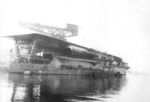
Kaga's fitting-out in 1928. This stern view shows the long funnel extending aft below the flight deck, and three 8-inch (200 mm) guns in casemates.
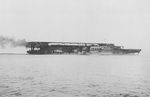
Kaga undergoing post-launch trials off Tateyama, September 15, 1928.
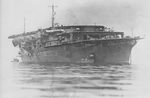
Kaga in 1930 as completed, with all three flight decks visible.
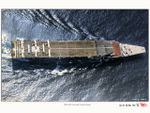
Aerial overhead view of Kaga in 1930. Note the three flight decks as well as the two dual 203mm turrets forward.
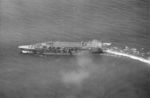
Kaga conducting air operations in 1930. On the upper deck are Mitsubishi B1M torpedo bombers preparing for takeoff. Nakajima A1N Type 3 fighters are parked on the lower deck forward.
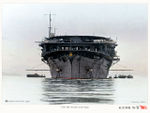
Bow view of Kaga, 1933. The three flight decks which existed prior to her major refit in 1934 are prominently visible.
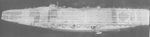
Kaga in 1934 after reconstruction showing the new, full-length flight deck above the wide battleship hull.
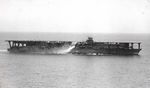
Kaga after her modernization, with her distinctive downward-facing funnel.
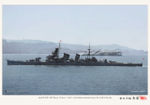
Kaga in 1936, visible behind Aoba.
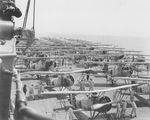
Kaga conducts air operations in 1937. On deck are Nakajima A2N, Aichi D1A, and Mitsubishi B2M aircraft.
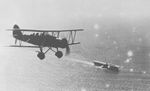
A Japanese Type 96 attack plane flies near Kaga during the China incident, circa 1937.
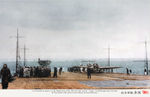
A view from the flight deck of Akagi, November 1941. Kaga is directly astern. The other two visible aircraft carriers are likely, from left to right, Soryu or Hiryu (horizon, center) and Shokaku or Zuikaku (horizon, right).
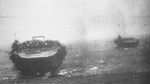
Kaga (foreground), with Zuikaku (background), heads toward Pearl Harbor sometime between 26 November and 7 December 1941.
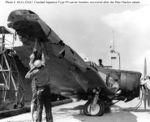
A crashed Type 99 being recovered after the attack on Pearl Harbor. The plane was later identified as having been part of Kaga's air group.
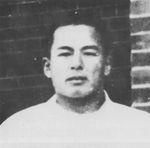
Lieutenant Shōichi Ogawa led Kaga's dive bomber group in the attack on Midway Island. Ogawa was fatally wounded later the same day when Kaga was hit by American dive bombers.
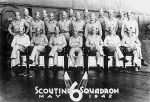
Dive bomber pilots from Enterprise who helped fatally damage Kaga on 4 June. Ensign John Q. Roberts, who was shot down and killed by Kaga's anti-aircraft guns, is standing at the far left of the photo. The bomb that killed Kaga's senior officers on the bridge may have been dropped by Ensign James C. Dexter, standing third from the right.


References
- Stille, M., Bryan, T. (2005) Imperial Japanese Navy Aircraft Carriers: 1921-45. Oxford, UK: Osprey Publishing Ltd.
- Brown, D. (1977). Aircraft Carriers. New York, NY: Arco Publishing Company.
- Lengerer, H. (1982). Akagi and Kaga; in Roberts, J. Warship IV. London, UK: Conway Maritime Press.
- Chesneau, R., Gardiner, R. (1980). Conway’s All the World’s Fighting Ships, 1922-1946. London, UK: Conway Maritime Press.
- https://www.navweaps.com/Weapons/WNJAP_79-50_3ns.php
- https://www.combinedfleet.com/kaga.htm
| Destroyers | II Tachibana • II Umikaze • II Tachibana Lima • III Wakatake • IV Isokaze • V Minekaze • V Fūjin • V Kamikaze • V Kamikaze R • V Mutsuki • VI [[Ship:Mutsuki (< 01.12.2016)|Mutsuki (< 01.12.2016)]] • VI Fubuki • VI Hatsuharu • VI Shinonome B • VI Shinonome • VII [[Ship:Hatsuharu (< 01.12.2016)|Hatsuharu (< 01.12.2016)]] • VII Akatsuki • VII Shiratsuyu • VII Yūdachi • VIII [[Ship:Fubuki (< 01.12.2016)|Fubuki (< 01.12.2016)]] • VIII Akizuki • VIII Kagerō • VIII Asashio • VIII HSF Harekaze II • VIII Asashio B • VIII HSF Harekaze • VIII AL Yukikaze • IX [[Ship:Kagerō (< 01.12.2016)|Kagerō (< 01.12.2016)]] • IX Yūgumo • IX Kitakaze • IX Minegumo • IX STAR Kitakaze • X Shimakaze • X Harugumo • X Hayate • X AL Shimakaze • X [[Ship:[Shimakaze]|[Shimakaze]]] • Yamagiri • II Umikaze • II Tachibana Lima • III Wakatake • IV Isokaze • V Minekaze • V Fūjin • V Kamikaze • V Kamikaze R • V Mutsuki • VI [[Ship:Mutsuki (< 01.12.2016)|Mutsuki (< 01.12.2016)]] • VI Fubuki • VI Hatsuharu • VI Shinonome B • VI Shinonome • VII [[Ship:Hatsuharu (< 01.12.2016)|Hatsuharu (< 01.12.2016)]] • VII Akatsuki • VII Shiratsuyu • VII Yūdachi • VIII [[Ship:Fubuki (< 01.12.2016)|Fubuki (< 01.12.2016)]] • VIII Akizuki • VIII Kagerō • VIII Asashio • VIII HSF Harekaze II • VIII Asashio B • VIII HSF Harekaze • VIII AL Yukikaze • IX [[Ship:Kagerō (< 01.12.2016)|Kagerō (< 01.12.2016)]] • IX Yūgumo • IX Kitakaze • IX Minegumo • IX STAR Kitakaze • X Shimakaze • X Harugumo • X Hayate • X AL Shimakaze • X [[Ship:[Shimakaze]|[Shimakaze]]] • Yamagiri
|
| Cruisers | I Hashidate • II Chikuma • III Tenryū • III Katori • IV Yūbari • IV Kuma • IV Iwaki Alpha • V Furutaka • V Agano • V Yahagi • VI Aoba • VI Gokase • VII Myōkō • VII Omono • VII Tokachi • VII Maya • VII ARP Myōkō • VII ARP Ashigara • VII ARP Haguro • VII Southern Dragon • VII Eastern Dragon • VII ARP Nachi • VIII Mogami • VIII Tone • VIII Atago • VIII Shimanto • VIII Atago B • VIII ARP Takao • VIII ARP Maya • VIII Tone 2 • VIII Tone 3 • IX Ibuki • IX Takahashi • IX Azuma • IX AL Azuma • IX Chikuma II • IX Chikuma II Golden • IX Suzuya • IX Suzuya Golden • IX BA Takahashi • IX Azuma B • X Zaō • X Yodo • X Yoshino • X Yoshino B • X Kitakami • X Yari • X Zaō CLR • X [[Ship:[Zaō]|[Zaō]]]
|
| Battleships | II Mikasa • III Kawachi • IV Myōgi • IV Ishizuchi • V Kongō • V ARP Kongō • V ARP Kirishima • V ARP Haruna • V ARP Hiei • V HSF Hiei • VI Fusō • VI Mutsu • VI Ise • VI Ise 2 • VI Ise 3 • VII Nagato • VII Ashitaka • VII Hyūga • VIII Amagi • VIII Yumihari • VIII Kii • VIII Ignis Purgatio • VIII Ragnarok • IX Izumo • IX Adatara • IX Musashi • IX Hizen • IX Iwami • IX Daisen • IX Tsurugi • IX Iwami B • IX Hotaka • X Yamato • X Bungo • X Shikishima • X ARP Yamato • X [[Ship:[Yamato]|[Yamato]]] • Satsuma
|
| Aircraft Carriers | IV [[Ship:Hōshō (< 23.01.2019)|Hōshō (< 23.01.2019)]] • IV Hōshō • V [[Ship:Zuihō (< 23.01.2019)|Zuihō (< 23.01.2019)]] • VI [[Ship:Ryūjō (< 23.01.2019)|Ryūjō (< 23.01.2019)]] • VI Ryūjō • VII [[Ship:Hiryū (< 23.01.2019)|Hiryū (< 23.01.2019)]] • VII [[Ship:Kaga (< 23.01.2019)|Kaga (< 23.01.2019)]] • VIII [[Ship:Shōkaku (< 23.01.2019)|Shōkaku (< 23.01.2019)]] • VIII Shōkaku • VIII Kaga • VIII Kaga B • IX [[Ship:Taihō (< 23.01.2019)|Taihō (< 23.01.2019)]] • X [[Ship:Hakuryū (< 23.01.2019)|Hakuryū (< 23.01.2019)]] • X Hakuryū • X Shinano • X [[Ship:[Hakuryū]|[Hakuryū]]] • Sekiryu
|
| N/A | |
| U.S.A. | IV [[Ship:Langley (< 23.01.2019)|Langley (< 23.01.2019)]] • IV Langley • V [[Ship:Bogue (< 23.01.2019)|Bogue (< 23.01.2019)]] • VI [[Ship:Independence (< 23.01.2019)|Independence (< 23.01.2019)]] • VI Independence • VI Ranger • VII [[Ship:Ranger (< 23.01.2019)|Ranger (< 23.01.2019)]] • VII [[Ship:Saipan (< 23.01.2019)|Saipan (< 23.01.2019)]] • VIII [[Ship:Lexington (< 23.01.2019)|Lexington (< 23.01.2019)]] • VIII Yorktown • VIII Lexington • VIII [[Ship:Enterprise (< 23.01.2019)|Enterprise (< 23.01.2019)]] • VIII Enterprise • VIII Saipan • VIII Hornet • VIII Saipan B • VIII AL Hornet • IX [[Ship:Essex (< 23.01.2019)|Essex (< 23.01.2019)]] • X [[Ship:Midway (< 23.01.2019)|Midway (< 23.01.2019)]] • X Essex • X Midway • X Franklin D. Roosevelt • X [[Ship:[Midway]|[Midway]]] • United States
|
| Commonwealth | |
| N/A | |
| Germany | IV Rhein • VI Weser • VI Erich Loewenhardt • VIII August von Parseval • VIII [[Ship:Graf Zeppelin (< 23.01.2019)|Graf Zeppelin (< 23.01.2019)]] • VIII Graf Zeppelin • VIII Graf Zeppelin B • X Manfred von Richthofen • X Werner Voss • X Max Immelmann • X Otto Lilienthal
|
| U.S.S.R. | IV Komsomolets • VI Serov • VIII Pobeda • VIII Chkalov • VIII Chkalov B • X Admiral Nakhimov • X Admiral Orlov
|
| Italy | VIII Aquila
|
| N/A | |
| Japan | IV [[Ship:Hōshō (< 23.01.2019)|Hōshō (< 23.01.2019)]] • IV Hōshō • V [[Ship:Zuihō (< 23.01.2019)|Zuihō (< 23.01.2019)]] • VI [[Ship:Ryūjō (< 23.01.2019)|Ryūjō (< 23.01.2019)]] • VI Ryūjō • VII [[Ship:Hiryū (< 23.01.2019)|Hiryū (< 23.01.2019)]] • VII [[Ship:Kaga (< 23.01.2019)|Kaga (< 23.01.2019)]] • VIII [[Ship:Shōkaku (< 23.01.2019)|Shōkaku (< 23.01.2019)]] • VIII Shōkaku • VIII Kaga • VIII Kaga B • IX [[Ship:Taihō (< 23.01.2019)|Taihō (< 23.01.2019)]] • X [[Ship:Hakuryū (< 23.01.2019)|Hakuryū (< 23.01.2019)]] • X Hakuryū • X Shinano • X [[Ship:[Hakuryū]|[Hakuryū]]] • Sekiryu
|
| U.K. | IV Hermes • VI Furious • VI Ark Royal • VIII Implacable • VIII Indomitable • VIII Colossus • VIII Theseus • X Audacious • X Malta • X [[Ship:[Audacious]|[Audacious]]] • Eagle
|
| France | VI Béarn
|
| Pan-Asia | VIII Sanzang
|
| N/A |
- Esta página fue modificada por última vez el 25 ago 2017, a las 14:52.
- Esta página se ha visitado 48 veces.
© 2011–2026 Wargaming.net. Todos los derechos reservados.
