Enterprise
| <span title="Enterprise (< 23.01.2019)" class="commentDrop" height="22">[[File:Enterprise (< 23.01.2019)_icon_small.png|link=]]</span> | |||||||||||
Purchase price14 000 
|
| Hit Points51 400 |
| 127 mm/38 Mk248 х 1 pcs. |
| Firing Range4.5 km. |
| Rate of Fire10 shots/min. |
| Reload Time6 sec. |
| HE Shell127 mm HE Mk32 |
| Maximum HE Shell Damage1800 |
| Initial HE Shell Velocity792 m./s. |
| Chance of Fire on Target Caused by HE Shel5 % |
| 20 mm Oerlikon Mk450 х 1 pcs. |
| . . . Average Damage per Second180 |
| . . . Firing Range2.01 km. |
| 40 mm Bofors Mk26 х 4 pcs. |
| . . . Average Damage per Second95.4 |
| . . . Firing Range3.51 km. |
| 40 mm Bofors Mk18 х 2 pcs. |
| . . . Average Damage per Second90.4 |
| . . . Firing Range3.51 km. |
| 127 mm/38 Mk248 х 1 pcs. |
| . . . Average Damage per Second64 |
| . . . Firing Range5.01 km. |
| Maximum Speed32.5 knot |
| Turning Circle Radius1 070 m. |
| Rudder Shift Time13.1 sec. |
| Surface Detectability Range14.58 km. |
| Air Detectability Range13.77 km. |
| <span title="Enterprise (< 23.01.2019)" class="commentDrop" height="22">[[File:Enterprise (< 23.01.2019)_icon_small.png|link=]]</span> | |||||||||||
| Purchase price14 000
|
| Hit Points51 400 |
| 127 mm/38 Mk248 х 1 pcs. |
| Firing Range4.5 km. |
| Rate of Fire10 shots/min. |
| Reload Time6 sec. |
| HE Shell127 mm HE Mk32 |
| Maximum HE Shell Damage1800 |
| Initial HE Shell Velocity792 m./s. |
| Chance of Fire on Target Caused by HE Shel5 % |
| 20 mm Oerlikon Mk450 х 1 pcs. |
| . . . Average Damage per Second180 |
| . . . Firing Range2.01 km. |
| 40 mm Bofors Mk26 х 4 pcs. |
| . . . Average Damage per Second95.4 |
| . . . Firing Range3.51 km. |
| 40 mm Bofors Mk18 х 2 pcs. |
| . . . Average Damage per Second90.4 |
| . . . Firing Range3.51 km. |
| 127 mm/38 Mk248 х 1 pcs. |
| . . . Average Damage per Second64 |
| . . . Firing Range5.01 km. |
| Maximum Speed32.5 knot |
| Turning Circle Radius1 070 m. |
| Rudder Shift Time13.1 sec. |
| Surface Detectability Range14.58 km. |
| Air Detectability Range13.77 km. |

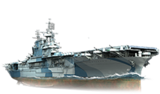
[[Ship:Enterprise (< 23.01.2019)|Enterprise (< 23.01.2019)]] — American Tier VIII aircraft сarrier.
A Yorktown-class strike aircraft carrier that combined a number of key characteristics typical for this type of ship: a large air group, superbly assembled take-off and landing equipment that allowed it to launch a large number of squadrons, good speed, and powerful AA defenses.
Enterprise first went on sale on both the NA and EU servers on 30 June 2017.
Modules
 |
Hit Points (HP) | Armor (mm) | Armor (mm) | Main Turrets (pcs.) | Secondary Gun Turrets (pcs.) | AA Mounts (pcs.) | Torpedo Tubes (pcs.) | Hangar Capacity (pcs.) |
Research price (exp) |
Purchase price ( ) | |
|---|---|---|---|---|---|---|---|---|---|---|---|
| Enterprise | 51 400 | 13 | 102 | 8 | 50/8/6/8 | 0 | 0 |
 |
Cruise Speed (knot) | Average Damage per Second (HP/min) | Loadout | Hit Points (HP) |
Research price (exp) |
Purchase price ( ) | |
|---|---|---|---|---|---|---|---|
| F4U-1D Corsair | 160 | 1400 | 0 | 0 |
 |
Maximum Torpedo Damage (HP) | Cruise Speed (knot) | Hit Points (HP) |
Research price (exp) |
Purchase price ( ) | |
|---|---|---|---|---|---|---|
| TBF Avenger | 10 167 | 133 | 15 | 0 | 0 |
 |
Maximum Bomb Damage (HP) | Cruise Speed (knot) | Hit Points (HP) |
Research price (exp) |
Purchase price ( ) | |
|---|---|---|---|---|---|---|
| Douglas SBD-5 | 137 | 14 | 0 | 0 | ||
| SB2C Helldiver | 137 | 14 | 0 | 0 |
 |
Maximum Speed (knot) |
Research price (exp) |
Purchase price ( ) | |
|---|---|---|---|---|
| Propulsión: 120 000 CV | 32,5 | 0 | 0 |
Compatible Upgrades
| Slot 6 |
 |

|
|---|
Player Opinion
Performance
Enterprise is a Tier VIII premium American aircraft carrier. Her main features are her increased numbers of squadrons compared to other American carriers, similar to Japanese carriers. In exchange for her increased plane load, her aircraft are of a lower tier than the ship itself, similar to Kaga.
Enterprise features a unique torpedo drop pattern, which makes her 5 plane torpedo bomber squadrons less powerful than they might seem at first glance. The drop pattern has some large gaps in it that make it less effective than a standard American torpedo drop against destroyers and cruisers. She is also the first aircraft carrier in the game able to equip armor-piercing bombs. These bombs will over-penetrate destroyers and light cruisers, but will deal significant damage to ships with heavier armor schemes, particularly German battleships. Captains who prefer to stick to more familiar bombs still have the option of equipping the standard 500-pound American high explosive bombs found on Ranger and Lexington. Enterprise features a large hangar capacity, but brings far more spare fighters than bombers to a battle, meaning careless captains can easily run out of bombers (particularly when she is up-tiered into Tier X games). Fortunately, she has access to Upgrade Slot 3 and Air Groups Modification 3 — normally restricted to Tier IX and X carriers — giving her bombers additional survivability.
Overall, Enterprise is a very difficult aircraft carrier to play well. While she is capable of heavily punishing enemy battleships with her bomber squadrons — particularly with the armor-piercing bombs — micro-managing her down-tiered fighter aircraft in order to win the air war is nearly a full-time job. Like other high tier aircraft carriers, she is not recommended for inexperienced players.
LittleWhiteMouse's Premium Ship Review: Enterprise from the NA forums.
Pros:
- At 96 planes, Enterprise has the largest hangar capacity of any Tier VIII carrier.
- Balanced mix of strike and fighter aircraft gives her outstanding flexibility not found on most other American carrier loadouts.
- Has access to Upgrade Slot 3, allowing her to mount upgrades usually reserved for Tier IX and X carriers.
- Has the option to mount either high explosive or armor piercing bombs.
- Armor piercing bombs are very effective against battleships and some heavy cruisers.
- Significantly lower detection radius than Lexington (though still larger than Shokaku).
Cons:
- Enterprise carries Tier VII aircraft which are weak when facing the anti-aircraft suites of Tier IX and X ships.
- Does not have the option to mount other flight control modules.
- Aircraft servicing time, while faster than Lexington, is considerably slower than Shokaku.
- Armor piercing bombs are often not effective against smaller cruisers and destroyers.
- The unique torpedo drop pattern can be difficult to adjust to.
Research
Optimal Configuration
Upgrades
As a Tier VIII carrier with six upgrade slots, the following upgrades are recommended on Enterprise:
Slot 1
- Air Groups Modification 1, in order to improve the fighters' damage capabilities, improve their ammunition loadout, and increase their odds of winning dogfights.
Slot 2
- Air Groups Modification 2, in order to further improve the fighters' durability.
Slot 3
- Air Groups Modification 3, in order to further improve the survivability of her bomber aircraft.
Slot 4
- Damage Control System Modification 1, in order to reduce fire and flooding chance on the ship (as carriers rarely have their engine or rudder incapacitated).
Slot 5
- Damage Control System Modification 2, to reduce the duration of any fires that opponents are able to light on her flight deck.
Slot 6
- Concealment System Modification 1 is the only useful option available.
Commander Skills
Recommended Commander Skills 
| ||||||||
|---|---|---|---|---|---|---|---|---|
| Cost (points) |
Endurance | Attack | Support | Versatility | ||||
| 1 |
 Priority Target
|
 Preventative Maintenance
|
 Expert Loader
|
 Aircraft Servicing Expert ★★★ |
 Direction Center for Catapult Aircraft
|
 Dogfighting Expert ★★★ |
 Incoming Fire Alert
|
 Evasive Maneuver ★ |
| 2 |
 High Alert ★ |
 Jack of All Trades
|
 Expert Marksman
|
 Torpedo Acceleration ★★★ |
 Smoke Screen Expert
|
 Expert Rear Gunner ★ |
 Adrenaline Rush
|
 Last Stand
|
| 3 |
 Basics of Survivability
|
 Survivability Expert
|
 Torpedo Armament Expertise ★★★ |
 Emergency Takeoff ★ |
 Basic Firing Training ★★ |
 Superintendent
|
 Demolition Expert
|
 Vigilance
|
| 4 |
 Manual Fire Control for Secondary Armament
|
 Fire Prevention
|
 Inertia Fuse for HE Shells
|
 Air Supremacy ★★★ |
 Advanced Firing Training ★★ |
 Manual Fire Control for AA Armament ★ |
 Radio Position Finding
|
 Concealment Expert ★★ |
| Key: ★★★ - Extremely Useful ★★ - Frequently Useful ★ - Occasionally Useful No stars - Not Useful | ||||||||
Consumables
As a Tier VIII carrier, Enterprise has access to the following consumables:
Premium Defensive AA Fire is recommended to counter any enemy carrier's attempts to "snipe" the player (that is, by having all bombers bypass allied ships undetected and attempting to sink the player in one hit). Premium Damage Control Party II is not recommended as it is only needed in dire moments, or when the player is the last one alive.
Camouflage
As a premium ship, Enterprise comes included with Type 10 camouflage that lowers her detection radius, reduces the accuracy of incoming shells, and increases the amount of experience she earns.
Signals
As a carrier, Enterprise is able to mount a maximum of four signal flags simultaneously and has no risk of detonating. India X-Ray, Victor Lima, and Juliet Whiskey Unaone flags are recommended to increase fire and flooding chances. November Echo Setteseven flags are also recommended to improve the ship’s anti-aircraft defenses and survivability of the strike aircraft squadrons against enemy fighters. Economic flags such as Equal Speed Charlie London and Zulu can be mounted to increase the ship’s experience and credit gain per battle. Special flags can also be mounted to further increase after-battle rewards.
Recommended Signal Flags 
| |||||
|---|---|---|---|---|---|
| Combat | |||||
 November Echo Setteseven ★★★ |
 Mike Yankee Soxisix
|
 India X-Ray ★★ |
 Juliet Whiskey Unaone ★★★ |
 Victor Lima ★★ |
 Hotel Yankee
|
 November Foxtrot ★★ |
 Sierra Mike ★ |
 India Delta
|
 Juliet Yankee Bissotwo ★ |
 India Yankee ★ |
 Juliet Charlie
|
| Economic | |||||
 Zulu ★★ |
 India Bravo Terrathree ★★ |
 Equal Speed Charlie London ★★★ |
 Zulu Hotel ★★ |
 Papa Papa ★ | |
| Special | |||||
 Wyvern ★★ |
 Red Dragon ★★★ |
 Dragon Flag ★★★ |
 Ouroboros ★★ |
 Hydra ★ | |
| Key: ★★★ - Extremely Useful ★★ - Frequently Useful ★ - Occasionally Useful No stars - Not Useful | |||||
Gallery
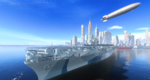
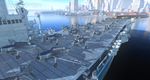
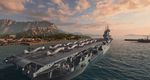
Aloha!
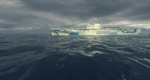
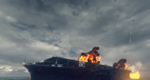
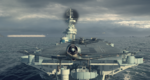
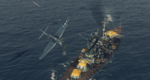
Enterprise bombers attack an enemy Shokaku.
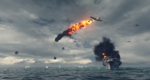
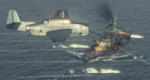
A TBF Avenger succumbs to the Shokaku's AA after dropping its torpedo.
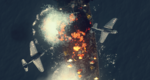
An Enterprise torpedo bomber flees an enemy Bismarck after dropping its payload.
Enterprise dive bombers head home.


Historical Info
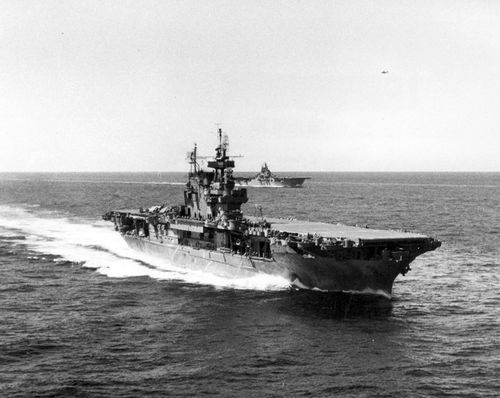
USS Enterprise, 1944
Construction
- Builder: Newport News Shipbuilding and Drydock Co.,
- Newport News, United States
- Laid down: 16 July 1934
- Launched: 3 October 1936.
- Commissioned: 12 May 1938
Specifications
- displacement: 19,875 tons, standard
- 251.38m length
- 33.37m beam
- 7.90m draft
Machinery
- 9 Babcock & Wilcox boilers, 4 Parsons turbines
- 2,754 – 4,360 tons of fuel oil
Performance
- 32.5 knots at 120,000 shaft horsepower
- 12,000 nautical miles at 15 knots
Armor
- Main belt: 102mm
- Transverse Bulkheads: 102mm
- Main Deck: 38mm
- Conning tower: 102mm side, 51mm top
Armament
Secondary
- Eight (8 x 1) 127mm/38 Mark 12
Anti-Aircraft
- Forty (8 x 2, 6 x 4) 40mm Bofors
- Fifty (50 x 1) 20mm Oerlikon
Aircraft
Total
- 75-95 Aircraft
Fighters
- Grumman F6F "Hellcat"
- Vought F4U "Corsair"
Torpedo Bombers
- Grumman TBF/TBM "Avenger"
Dive Bombers
- Douglas SBD "Dauntless"
- Curtis SB2C "Helldiver"
Complement
- 230 Officers, 1,990 Enlisted
Design
By the mid 1930s, the United States Navy had close to 20 years of experience with aircraft carriers. Over three generations of the type (Langley, Lexington, Ranger), the Navy acquired a wealth of knowledge on aircraft carrier construction and application; they were one of the nations on the forefront of carrier technology. Although USS Ranger was the first purpose-built carrier of the U.S. Navy, she ultimately proved to be a disappointment. Ergo, the Navy decided to spend their last remaining CV tonnage allocated from the Washington Naval Treaty to build two new vessels of 20,000 tons displacement – the new Yorktown-class carriers – that would incorporate the lessons learned on the construction of Ranger, but improve on protection (one of Ranger’s glaring deficiencies).
20,000 tons per ship was a sufficient compromise that allocated enough tonnage to apply armor deemed adequate by the Navy. The focus of the armor was to ensure that it would be able to mitigate damage from shells of 152mm caliber and below. As such, both the main armor belt and the transverse bulkheads that covered the citadel were 102mm thick. In consequence the horizontal protection was limited; a main deck 38mm thick at best. Furthermore, a torpedo bulge was placed on top of the main belt. It was of a triple chamber design: the inner layer was filled with air to dampen the impact, and the outer two layers were filled with fluids to spread out the shock. The system could mitigate explosions under 400lbs of TNT, about half of what a battleship can sustain.
In order to simplify design, the aviation facilities for the Yorktown-class were similar to the ones used on Ranger. Therefore the single deck hangar was built on top of the hull with the main deck used as the hangar deck, and the flight deck was unarmored and built on top of the hangar. The hangar itself was built using light steel and not fully enclosed; many of the side plates were on rollers and could be pushed away to expose the internals. This had a benefit: aircraft could be warmed up while they were still inside the hangar, and during combat fires could be properly ventilated and debris thrown out. As standard fleet carriers, Yorktown-class had three elevators across the flight deck and two steam catapults positioned forward. Interestingly, there was a third catapult – in the hangar deck – to launch scouting aircraft if the flight deck was occupied.
Originally as designed, the Yorktown-class would carry 84 aircraft plus 6 in reserve; complement in 1938 was 18 fighters, 35 torpedo bombers, and 37 dive-bombers. Initially dive-bombers were the lion’s-share of aircraft aboard due to US carrier doctrine assigning dive-bombers both the roles of scouts and of bombers. In fact, initially there would be separate dive bomber squadrons solely for either scouting or bombing. By late in the war, the on-board complement heavily favored fighters, as by then the largest threat to a carrier task force were kamikaze aircraft.
US aircraft carriers were known for their impressive islands and the Yorktown-class was no exception. The starboard structure contained the centers for command, navigation, aircraft and fire control. Furthermore – first for any US aircraft carrier – the island had an integrated funnel.
As US carrier doctrine became more offensive in nature, it was realized that high-speeds was a necessary trait for a fleet carrier to possess. A speed above 30 knots would allow it to keep pace with the newly constructed treaty battleships. Designers elected to install 9 boilers and 4 turbines, with the fire rooms placed ahead of the engine rooms. This simplified design but was proven to be prone to damage. In speed trails, the carriers could easily achieve 120,000 shaft horsepower, which enabled a speed of about 33 knots.
Even though aircraft are considered the ‘main weapons’ of a carrier, the Yorktown-class had a plethora of self-defense artillery. For long-range engagement, the carriers carried the novel 127mm/38 DP guns in 8 single-mounts. Their combat record would prove them to be excellent performing rifles. They were positioned in sponsons off the deck, which limited firing arcs, but did not obstruct the operations of the aircraft. Originally the class was equipped with M2 12.7mm machine guns in 24 single-mounts and 28mm/75 DP guns in 4 quad-mounts for short and intermediate-ranged defense, respectively. The 28mm guns were positioned fore and aft of the island, and the 12.7mm were positioned on the peripheries of the flight deck.
Throughout her service life, Enterprise underwent constant modifications to keep up with the rigors of combat. Most significantly, a CXAM-1 radar set was installed in 1940. Radar sets were crucial for the successes of US carriers; early target acquisition and proper management of combat air patrols increased carrier survivability. By 1942, Enterprise had her hangar catapult removed – as it was useless – and her wooden crash barriers were replaced with canvas ones; they caused less damage to the aircraft, the ship, and the pilot. Constant alteration of her AA armament was a common theme. From the start, the machine guns lacked hitting power, and the 28mm guns had poor performance. With modifications starting in 1942 she replaced her 12.7mm guns with 30 – and later 50 – Oerlikon 20mm auto-cannons. In 1943, she underwent a major refit. This brief respite allowed the crews to replace the 28mm with 40 Bofors 40mm auto-cannons. The Mark 33 fire directors were replaced for the newer Mark 38, which could not only track fast moving targets, but low-flying targets as well. Along with a Combat Information Center installed in the island, Enterprise was fitted with facilities to handle night fighter operations. Furthermore, she received torpedo blisters to cover her main belt and received her first complement of Grumman F6F fighters. Enterprise’s last major refit came in 1945. Knowing the decreasing potency of 20mm cannons in the light of kamikaze, many were replaced by 40mm cannons.
USS Enterprise (CV-6) was the second of the Yorktown-class aircraft carriers. She was laid down 16 July 1934 at Newport News Shipbuilding and Drydock Co. in Virginia and launched 3 October 1936.
Service
Nearly four years after her hull was laid down, USS Enterprise (CV-6) — later lovingly dubbed “The Big E” and “The Grey Ghost”, the sixth aircraft carrier built for the United States Navy — was commissioned on 12 May 1938 and given orders to join the Pacific Fleet. The United States kept a close eye on the eastern side of the Pacific during the 1930’s, alarmed by Japanese aggression in Far East and the incidents leading up to and the outbreak of the Second Sino-Japanese War. In a gambit to deter southern Japanese expansion towards resource-rich British Malaya and the Dutch East Indies, the USA had been stationing a large fleet in the central Pacific port of Pearl Harbor, a force of eight battleships and two carriers; USS Saratoga (CV-3), converted from the hull of a Lexington-class battlecruiser of the same name as per the Washington Naval Treaty nearly two decades ago at the time, and the newest addition: Enterprise. Before her explosive entry to the war, Enterprise’s role in the Pacific was ferrying weapons and materials to outlying island US bases, hedging against possible Japanese aggression. When the first bombs fell on Pearl Harbor on 7 December 1941, Enterprise was merely hours away from home, returning from what would be her last ferry job. In the same fortunate storm that allowed the 400-strong Japanese attack aircraft to wreak havoc on Pearl Harbor, the same storm forced Enterprise and her entourage to reduce speed on their journey home to Pearl Harbor. Had Enterprise made it to Pearl Harbor before the Japanese attacks had subsided, she may well have ended up the biggest casualty of the attack; armed with outdated 1.1” and .50 caliber AA guns to protect herself, she would have faced the combined might of all six Japanese fleet carriers by herself. During the haywire month of December 1941, she patrolled the waters off western Hawaii, watchful for returning Japanese warships. The beginning of Enterprise’s legacy was as the first US warship to sink an enemy vessel; her dive bombers struck a Japanese submarine (I-70) operating on the surface. However, worse was still to come, and 1942 would be the most calamitous and decisive year of the Pacific War, with “Big E” at the forefront of all of it.
With the dark situation in Europe, early American attention was focused on the European theatre: protecting convoys from marauding German U-Boats and wrestling with the Italian Regia Marina for the Mediterranean. Subsequently, American strategy was a forced stance of an ‘offensive defensive’ in the Pacific theatre. Saratoga was taken out of action in January by a Japanese submarine and couldn’t re-join the front until May, and USS Yorktown (CV-5) was hastily transferred to the Pacific to join USS Lexington (CV-2) and Enterprise, but the three were outnumbered two-to-one by Akagi, Kaga, Soryu, Hiryu, Shokaku and Zuikaku of the IJN. The combined forces of the Imperial Japanese Army and Navy were expanding in nearly every direction, with the IJN focusing on southern expansion - threatening to cut off Australia and New Zealand from external support - and pushing westward towards the island of Midway. If Midway fell, Hawaii and Pearl Harbor would be exposed to further Japanese air raids. The job for Lexington, Yorktown, Enterprise - and soon after USS Hornet (CV-7) and USS Wasp (CV-8) - was to draw the attention of the Imperial Japanese Navy. Enterprise spent February carrying out daring air raids on Japanese-held islands, dealing little actual damage but nevertheless improving American morale in open shows of defiance to the supposed Japanese dominance of the seas. She returned to Pearl Harbor in March and remained in-port until April, undergoing repairs, replenishments, and refits; the most significant alteration being the replacement of the outdated .50 caliber machine guns that failed to protect her from modern aircraft, with the new 20mm Oerlikons AA guns. While post-war evaluations of this gun were mediocre, they were a definite improvement over their predecessors. Enterprise was at sea again by the second week in April. On 13 April 1942, Enterprise linked up with her step-sister Hornet as the two departed on the strike against mainland Japan dubbed the “Doolittle Raid” – a daring aerial attack where 16 modified B-25 bombers took off from the deck of Hornet to bomb Tokyo, with Enterprise sailing with her in case the worst happened and the two were engaged by enemy warships. By the end of April, however, the winds were changing. Furious over the fact that American bombers dared to attack mainland Japan, the IJN began drawing up plans to strike the island base of Midway, to draw out the American carriers into a decisive battle.
At the end of April, Enterprise and Hornet steamed from Pearl Harbor southwards to Australia - hoping to join Lexington and Saratoga in the apparent upcoming battle in the Coral Sea area - as the IJA drove American and ANZAC troops out of the area, with heavy support from the IJN. The Battle of the Coral Sea, resulting in the loss of Lexington, was the only major battle of the Pacific that Enterprise ended up missing, arriving a day late. However, in that engagement the IJN lost the light carrier Shoho, Shokaku was badly damaged, and Zuikaku lost many of her most skilled pilots, meaning the latter two were unable to participate in the upcoming invasion of Midway. Above all else though, the strategic loss of the IJN at the Battle of the Coral Sea broke the spell of Japanese invincibility that hung over the Allies. American cryptanalysts had broken the Japanese JN-25 naval code, and knew that they were planning an invasion of Midway, supported by battleships, escorting warships, and Akagi, Kaga, Soryu and Hiryu: four of the six of Japan’s elite carrier force. All the USN had to answer to this threat to Midway was inexperienced Hornet, battered Yorktown, and the ship quickly becoming renown as the best carrier the USN had to offer: USS Enterprise.
The most decisive battle of the Pacific War began on 4 June, when attack planes from Hiryu struck a battle-ready Midway in a pre-emptive attack. After this first strike, the Japanese carriers rearmed their attack planes with anti-ship bombs and torpedoes, expecting enemy retaliation; lacking such, the planes were re-armed with ground attack equipment and prepared to strike Midway a second time. During the re-arming process, Japanese Admiral Nagumo was informed that one of his scout planes had sighted an American carrier (Yorktown) less than two hours’ flight time from the main body of his fleet. The second strike against Midway carried through, but too much time had passed for a third strike on the island. American carrier-based aircraft were on the horizon. As Nagumo reorganized his carrier planes to prepare for a battle of the skies, the American naval fleet had dispatched 84 dive bombers, 41 torpedo bombers, and 26 fighters to engage the Japanese. While many of the dive bombers and fighters arrived at the expected location of the Japanese fleet and returned to Midway to scout the area, the 41 unescorted Douglas Devastator TBDs found and made one of history’s most heroic attacks. Of the 41 TBDs that struck the Japanese, only four returned to Enterprise, two to Yorktown, and none made it home to Hornet. While this strike was with heavy sacrifice, it drew the attention of the Japanese fighters and AA guns to focus on low-flying torpedo bombers. Without notice, 30 of Enterprise’s Douglas Dauntless SBD dive bombers struck Akagi and Kaga, while 17 of Yorktown’s SBDs hammered Soryu. Three bombs struck Akagi, while four hit Kaga. Both carriers had their decks littered with armed and fueled aircraft, aviation fuel, and loose bombs and torpedoes. The two cataclysmically erupted, once the queens of the Pacific, now floundering, burning wrecks, as Soryu burnt in the distance. Hiryu, however,, was untouched, and as her fellow carriers burnt, she launched aggressive strikes that would ultimately result in Yorktown’s demise. Yorktown had been at sea so long that she hadn’t even been able to replace her obsolete .50 cailiber AA guns. With Yorktown mortally wounded and Hornet without planes, the mantle of battle fell on Enterprise. The few surviving planes landed on Enterprise’s deck and recuperated, then took off to exact revenge upon Hiryu. Two dozen SBDs from Enterprise and the survivors from Yorktown found Hiryu as she was preparing her planes for another strike, and shortly after finding her, four gaping, burning holes were torn in Hiryu’s deck, damaging the last operational IJN carrier at Midway beyond repair. With four Japanese and one American carrier at the bottom of the sea, the supporting surface fleet of the IJN closed in on Enterprise and hastily re-armed Hornet. Rear Admiral Raymond A. Spruance withdrew his remaining carriers to the east, but not before finding the Japanese heavy cruisers Mogami and Mikuma. His task force sank Mikuma along with the destroyers Arashio and Asashio, while heavily damaging Mogami. The final casualty of Midway was the destroyer USS Hammann, torn in two by Japanese submarine I-168’s torpedoes.
Enterprise returned to Pearl Harbor by 13 June, having lost her twin sister Yorktown and many of her aircrew, but carrying the immense pride and success of nearly single-handedly sinking half of the IJN’s carrier force in a single day. While Midway did not bring immediate victory to the Allies, it brought them tactical parity. Enterprise spent a month in port before setting sail for the Solomons, to participate in the gruelling Guadalcanal campaign.
The Solomon Islands were at a military stalemate. Both sides had land air bases that could strike the southeastern Solomons, but neither side could explicitly control the skies in that area without a permanent airbase. The Japanese began construction of such an airbase in late June 1942, and American strategists concluded that this was a threat which needed addressing. By July 1942, the U.S. Navy had Enterprise, Wasp, Saratoga, and Hornet which could field a combined total of roughly 300 planes, while the Japanese fleet carriers Shokaku and Zuikaku were supplemented by five light carriers - Ryujo, Zuiho, Chitose, Chiyoda and Jun’yo - which could also operate about 300 planes. As an impressive USN fleet sailed for Guadalcanal, the vengeful remaining carriers of the IJN sailed for the same destination. The waters of Guadalcanal were dangerous, with the constant threat of enemy land-based attack planes and submarines on top of the limited space for maneuvers. The days of “raid-and-run” were over, and the relative parity in the Solomons led to both sides having to consistently pay a high price to keep up their strength in the area. Enterprise and her accompanying carriers spent early August supporting Allied naval invasions, with the first big challenge to “Big E” coming from Shokaku, Zuikaku, and Ryujo in late August. While Saratoga successfully sent lone Ryujo to the bottom, the true target of the Japanese attack was clear: Enterprise was in their sights. Enterprise took her first serious combat damage, suffering three direct bomb hits that tore holes in her starboard quarter and ruined a 5-inch gun; despite being holed above and below the waterline, though, Enterprise would not go down here. (The Japanese claimed that Enterprise had been sunk, the first of three such claims.) Enterprise was crippled though, and following a burial of the 74 men killed during the Battle of the Solomons, she limped back home to Pearl to mend her wounds and replenish her crew. She remained at Pearl until mid-October, setting sail for the Solomons once again.
Enterprise’s presence in the south was sorely missed while she was away. Saratoga took another torpedo that took her out of action for three months, and Wasp was sunk by Japanese submarine I-19 in perhaps the most devastating torpedo salvo in history (destroyer USS O’Brien was lost and battleship USS North Carolina was crippled on top of sending Wasp to the bottom). By late September, inexperienced Hornet was the only operational ship in the area, and Enterprise was needed more than ever. Steaming from Pearl armed with 40mm Bofors autocannons – which would become the most dependable intermediate anti-aircraft weapons of the war - alongside the newest addition to the fleet, battleship USS South Dakota, Enterprise reached the calamitous waters of the Solomons on 24 October. Two days later, Enterprise’s scout planes spotted an approaching Japanese armada, and the Battle of Santa Cruz was underway. The scout planes that spotted the armada also spotted the light carrier Zuiho, and they promptly punched two holes in her flight deck, forcing her out of the battle early. Zuiho would fight Enterprise again, however. Across two days of battle, Hornet was lost, leaving Enterprise all on her lonesome against Japan. Enterprise took a couple bombs to the flight deck, but her Combat Air Patrol and heavy AA armament tore apart Japanese attack planes and expertly dodged nine torpedo waves and dozens of bombs. Although the naval aviation wing of the Pacific Fleet was now down to Enterprise alone, every battle had cost the Japanese far greater aircraft and pilots than American losses. Enterprise withdrew to Noumea for patch-job repairs, lurking in the area, ready to counter-strike a possible third Japanese naval breakthrough. Come November 1942, that third breakthrough came.
Unfortunately for the IJN, three of the five carriers the Japanese they had in the area were either too badly damaged or lacking sufficient aircrews to support the battle, and the remaining two did not support the operation. Due to her hasty repairs, Enterprise was not in full fighting condition, but she had no enemy carriers to contest her in the skies. This allowed Enterprise’s SBDs to find and sink battleship Hiei as she limped away after suffering heavy damage following long night battles on 13 November. The following day, her planes wreaked havoc upon the slow-moving Japanese troop transports, momentarily breaking off to search for enemy carriers, of which they found none. After the brief sinking of heavy cruiser Kinugasa, the planes returned their undivided attention to the transports. At the end of the campaign, the Japanese were down two battleships, three of their five carriers were badly damaged, and any hope for control of the Southern Solomons was lost.
With the final victories and the weeding out of scattered Japanese resistance in the Solomons, Enterprise could finally retire from the frontlines after over a year of hard day-by-day service. Finally arriving back at Pearl Harbor on 8 May 1943, she spent ten long weeks training new air groups with only a short break to receive her Presidential Unit Citation, the first to ever be awarded to a carrier. For the first time in nearly four years, Enterprise arrived in Washington State on 20 July 1943, finally back on American soil. While her crewmen enjoyed some much-deserved shore leave, the workmen of Bremerton Navy Yard swarmed over the ship from the July through October of that year, sending her back to war with a fresh coat of paint and improved technology in anticipation of the coming years where the ship would be operating in enemy territory. Enterprise was back at Pearl by 6 November, with new crewmembers, new captains, new planes, and new technology to prepare her for the coming years of conflict. The relative lull of 1943 was coming to an end, and now Enterprise and Saratoga, the surviving veterans of 1942, were joined by seven new Essex-class carriers and nine new Independence-class light carriers, forming the basis of the new Fast Carrier Task Forces that would become the core of the USN.
With the USN carrier force sextupled in size, Enterprise and her sixteen new compatriots sailed for the Gilbert Islands on 19 November 1943. The year of transition was over, and the time for action had come. Within a week, what was once Japanese sovereign soil was now in American hands. No Japanese carriers came in response to the Gilbert’s defense, as the now heavily outnumbered Japanese were in home waters training new seamen and pilots. With the arrival of 1944, American operations in the Pacific took on a frenetic pace. Enterprise, accompanied by new USS Yorktown (CV-10) and USS Bellau Wood (CVL-24) formed the core of the soon-to-be famous Task Force 58, and set sail for the Marshall Islands in 1944. The Marshalls fell, but again, no response from Japanese carriers. While returning from the Marshalls, however, the trio were ordered to strike the inner perimeter of the crucial Japanese naval base of Truk, in the Carolina Islands. Despite being unsure of her new strengths, the USN struck Truk on 17 February 1944, with another tab in Enterprise’s legend being made: the first successful night radar bombing attack, with the combined force sinking three Japanese cruisers, four destroyers and nearly 45 auxiliary ships, paralyzing Truk and the Japanese ability for sustained operations in the area. Enterprise continued supporting American landings between February and April, returning to the port of Majuro in the Marshalls by the end of the month. Big things were on the horizon, with grand battle plans about to go into motion.
On 6 June 1944 - D-Day in Europe - Enterprise and the rest of Task Force 58 sailed from Majuro towards the Mariana Islands, accompanied by over five hundred American warships. Between the 11th and 14th of June, Enterprise & Co attacked Saipan, Rota, and Guam by the 17th. The Japanese had to respond to the attack on the Marianas, and the Combined Fleet had sortied a few days prior to head for the Philippine Sea. The gigantic American fleet would be met by Enterprise’s old nemeses Shokaku and Zuikaku, the new armored fleet carrier Taiho, the six light carriers Zuiho, Ryujo, Jun’yo, Hiyo, Chitose and Chiyoda, and a large supporting fleet including the overprotected super-battleships Yamato and Musashi. The conflict that became known as the Battle of the Philippine Sea, also known as the “Marianas Turkey Shoot”, began on 19 June. Japanese planes were spotted headed for the American fleet on the morning of the 19th, Enterprise herself, the only carrier present with experience in a fleet battle, expected a busy day, but the sheer difference in pilot quality between the two forces were apparent; the Japanese pilots were under-trained, undisciplined and inexperienced, with Enterprise’s fighters joining the fray high above the Philippine Sea, and her attack craft crippling the nearby air strips on Guam. On the 20th, Enterprise made her big contribution to the battle, spotting the elusive retiring Japanese combined fleet, as the 900-odd US planes fell upon the retreating Japanese, having already lost Shokaku and Taiho to submarines, with the planes claiming Hiyo in the carnage. Following the disastrous Japanese defeat at the Philippine Sea, Enterprise continued to support the Marianas campaign until early July, returning to Pearl Harbor for some momentary rest and recovery. "Big E" returned to sea by the end of August, joining Task Force 38 in continued strikes along the southernmost Japanese-held islands in the Pacific until the end of September. Come early October, Enterprise and Task Force 38 sailed to strike Okinawa, Formosa, and the Philippines, in preparation for the liberation of the Philippines. While “Big E” was in port on 23 October, she received word that the Japanese Combined Fleet was at sea again and were headed for the site of the American invasion: Leyte Gulf. Enterprise raced back to the frontlines, ready to join in the sixth and final carrier battle of the war.
The Battle of Leyte Gulf was really four separate battles regarded as a single one in a key theatre of war that both sides were heavily invested in. Enterprise was the only carrier out of the 34 carriers present to strike all three Japanese groups. Enterprise’s planes fell on the ‘Southern Force’ in the early morning of 24 October, softening them up for the following night battle in the Battle of Surigao Strait that would prove fatal to the Japanese. On the afternoon of the 24th, Enterprise’s airgroup attacked the ‘Center Force’, mercilessly battering Musashi until she finally sank after taking a legendary amount of punishment, with "Big E" sharing the kill on one of history’s biggest battleships. While sending Musashi to the bottom, her planes spotted the final Japanese ‘Northern Force’. By the early morning of the 25th, Enterprise and nine other fast carriers jumped on the Northern Force, sending Zuikaku, Zuiho, Chiyoda and Chitose under the waves, with Enterprise claiming the main kill on Zuiho. Following the final conflict of Leyte Gulf, the Battle off Samar, where outnumbered and outgunned escort carriers and destroyers courageously held off the remnants of the Japanese Centre Force, the Battle of Leyte Gulf was a decisive American victory, with the battle being the last major battle the IJN could muster, and the final carrier battle of the war. The Japanese would not give in so easily, however, and on 29 October, Enterprise’s crew had a first-hand encounter with one of the last-ditch weapons of the Japanese armed forces: the kamikaze. While the kamikaze missed Enterprise, nearby USS Franklin (CV-13) and Belleau Wood took some serious damage from the suicide craft. Such a weapon drastically changed the momentary feeling of comfort after Leyte Gulf; such an unconventional and unexpected weapon that proved its deadly capability dispelled the optimism of "Big E"’s sailors. The Japanese mainland drew near, as did the threat of land-based aircraft and more kamikazes.
Enterprise spent November of that year patrolling the northern shores of the Philippines with Task Force 38, before finally returning to Pearl Harbor on 6 December. When she left for the Philippines on the 24th, she was a different carrier – her new air group was specially trained for night-carrier operations. Enterprise had the new job of harassing the enemy at night, using the form of warfare that was developed on her very decks. Joining her night-time escapades were several escort carriers, the light carrier USS Independence (CVL-22), and her oldest flat-top friend Saratoga. Enterprise spent January of 1945 sweeping the China Sea, striking Japanese shipping and Japanese-held ports in China. After replenishments at Ulithi, Enterprise was called out to provide night-and-day coverage for the air raids on Tokyo on 16-17 February. Unlike her time with Hornet in 1942, “Big E” herself could send her attack aircraft to strike the Japanese capital. Following the raids on Tokyo, Enterprise moved to support the next invasion target of the US Marines – Iwo Jima. Enterprise supported the landings from mid-February, setting yet another record; the record for having planes continuously in the air for 174 hours straight from 23 February through 2 March. With another record to her name, the crew of Enterprise were still in constant fear of a kamikaze hitting the ship — they had seen Franklin and Belleau Wood take serious damage, and USS St. Lo (CVE-63) had been sunk back in late October 1944 to a kamikaze — and USS Bismarck Sea (CVE-95) was lost to a kamikaze during the Battle of Iwo Jima on the same day Saratoga was hit by one. Enterprise was fortunate to not have received any major damage while serving so close to the Japanese mainland, but one of her many fortunes were about to turn sour.
“Big E” was back in range of the Japanese shore by 17 March after a replenishment run to Ulithi, and resumed her duty as a night strike carrier. On the 18th, a single bomber slipped through and dropped a ‘dud’ bomb on her deck, only succeeding in killing a lone sailor. The next day, Franklin had her second brush with death, losing 700 men in a catastrophic kamikaze strike, with “Big E” quickly ordered to escort the battered carrier clear of the combat zone. The next day, however, it was remarked as being “raining kamikazes”. Her AA guns held them off, though, but friendly ships were a tad overzealous. A ‘friendly’ 5” shell from a supporting ship burst above a pair of Enterprise’s quad 40mm’s, killing seven men, wounding thirty, and striking fully-loaded Hellcats nearby. Within seconds, the Hellcats exploded into smoke and flame, smothering the deck in flame and smoke, although the situation looked worse than what it truly was. Although she recovered to full speed ten minutes later, the damage was enough to force her back to Ulithi for repairs. Returning to action on 5 April, “Big E” supported the allied invasion of Okinawa until 11 April, taking another kamikaze. The plane imbedded itself deep within the ship’s stern, with the bomb missing initially, instead striking the water so close to the ship it had the effect of a torpedo. Enterprise’s torpedo blister was pierced, two generators were blown loose and several fuel tanks burst open. The damage was so extensive that the radar and other sensitive instruments were damaged, and it became clear that she’d be paying yet another visit to the repair ships at Ulithi. The USN were feeling the pain of lurking so close to the Japanese mainland, and in the Okinawan invasion 30 ships were lost and over 350 were damaged, with the carriers being the prime targets. Enterprise returned to sea by 6 May, operating day-and-night to protect the skies over Okinawa. On the 11th, USS Bunker Hill (CV-17) suffered a similar fate that struck Franklin mere months earlier, taking two kamikazes and being escorted back to safe waters by Enterprise, her crew all too familiar with the sight of a friendly burning carrier. Bunker Hill was serving as the flagship of Admiral Mitscher — who moved his flag to Enterprise after Bunker Hill took heavy damage — but “Big E” would only have three days of the war left in her. On 14 May, during another of the all-too-common Japanese kamikaze and bomb raids on the American carriers, a low-flying Zero managed to strike Enterprise with terrifying precision; his plane struck “Big E” just behind the forward elevator, plunging into the belly of the ship before exploding, sending the forward elevator 400 feet skyward. She attempted to stay in enemy waters for two more days, patching most of her wounds, but the glaring hole on her flight deck could only be helped by a major shipyard. She could recover planes, and very precariously launch them, but these were deemed unsatisfactory for combat, and on 16 May, perhaps the greatest veteran carrier of World War II set sail for home waters. She and her crew couldn’t have known it at the time, but the war was over for “Big E”.
Following a pit stop at Ulithi, Enterprise received a rousing welcome at Pearl on 30 May, the first of many warm receptions she would receive. Arriving at Bremerton on 7 June 1945, “Big E” entered the drydocks to repair damage and get a new coat of paint, the usual maintenance and overhaul, and her sailors had some undeniably-deserved shore leave. On 2 July 1945, Secretary of the Navy James E. Forrestal paid a visit to “Big E” and saw for himself the damage within the great ship that fought from the first days of war in the shallows of Hawaii to downtown Tokyo. By the time she escaped the drydocks of the Puget Sound Naval Yard in September, Enterprise was a warship without a war. On the 13th she sailed for Pearl via San Francisco, arriving on the 23rd, embarking Vice Admiral Frederick C. Sherman, Captain William L. Rees, and 1,149 liberated POWs due for discharge. By the 25th she was at sea again heading for New York City to attend the biggest Navy Day celebration ever held in the USA. In mid-October, Enterprise was hours from New York City, and 101 planes flew over the great city to herald the approach of the first 10 of 47 ships to attend the show. It was time for “Big E” to receive the credit, applause, and love she deserved. For the two weeks, the ship was in New York, she was truly the center of attention, her name rarely mentioned without adjectives such as “the Mighty E”, “the valiant carrier”, “the unsinkable”, etc. The festivals centered around “Big E” lasted for weeks before she answered her very last call of duty. Alongside several other carriers, Enterprise would join the ‘Magic Carpet’ operation, which entailed returning American servicemen from Europe. Between November 1945 and the middle of January 1946, Enterprise ferried over 10,000 troops back home, briefly stopping in Southampton to claim perhaps her final legend; Enterprise became the first — and to date only warship outside the Royal Navy to be awarded with the Royal Navy’s highest honor: the Admiralty Pennant. Completing her final magic carpet voyage, Enterprise, at the age of nearly eight long years, had rendered final service to her country. “Big E” settled down in Bayonne, New Jersey, on 18 January 1946, never to sail under her own steam again.
Despite high hopes that the greatest ship of the United States Navy would serve forevermore as a museum ship, on three separate occasions the chance to save her fell through. Decommissioned on 17 February 1947, she idled in port for twelve-and-a-half years before her fate at the scrapyard was sealed. In 1956, Secretary of the Navy Thomas S. Gates released a long list of ship’s names the Navy could no longer afford to maintain even in mothball status and would be sold for scrap. Enterprise was on that list. Despite being only 18 years old at the time, she was very old for her age. Even with redoubled efforts, she ultimately could not be saved. On 1 July 1958, “Big E” was sold for scrap; her immense pride as a ship with twenty battle stars and eight more awards to her name, was slowly dismantled until completed in May 1960. All that remain of her today is her anchor, her bell, a museum dedicated to her, precious few other oddities, and her nameplate, boldly stating ENTERPRISE in raised white letters, the name of the proudest ship to ever serve the United States Navy.Historical Gallery
Aerial view of Enterprise at sea in 1945.
USS Enterprise in 1939.
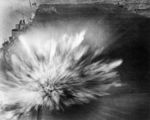
A Japanese bomb explodes on the flight deck of Enterprise on 24 August 1942, during the Battle of the Eastern Solomons, causing minor damage.
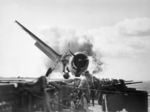
En route to attack Makin Island on 10 November 1943, this Grumman F6F Hellcat (VF-2) crash landed on Enterprise's flight deck.
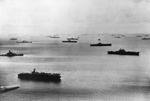
Enterprise on the right with the Fifth Fleet at Majuro, 1944.
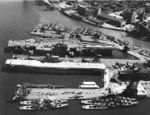
Enterprise awaiting disposal at the New York Naval Shipyard on 22 June 1958; the recently launched USS Independence is fitting-out on the opposite pier face.
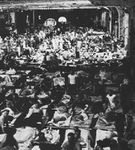
GIs in the hangar bay of Enterprise in 1945.
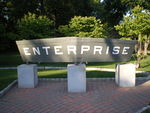
The stern plate of USS Enterprise located in River Vale, New Jersey.
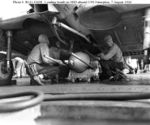
Members of the fight deck crew of Enterprise loading a bomb onto an SBD dive bomber, 1944.
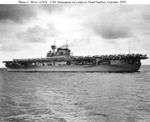
Enterprise in 1939.
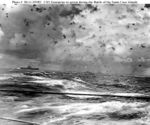
Enterprise (center left) during a Japanese air attack, Battle of Santa Cruz, October of 1942. South Dakota (center right, horizon) has just fired one of her 5"/38 mounts.
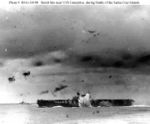
Enterprise, as a bomb explodes close on the port beam during the Battle of Santa Cruz, October of 1942.
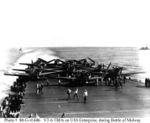
TBD torpedo bombers being readied aboard Enterprise during the Battle of Midway, June of 1942.
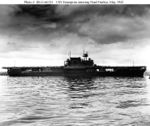
Starboard view of Enterprise, 1942.
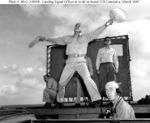
Landing Signal Officer (LSO) guiding in an aircraft aboard Enterprise.
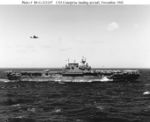
Enterprise conducting landing operations, 1943.
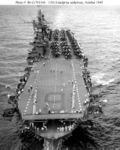
Aerial view of Enterprise from the bow, 1945.
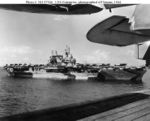
Enterprise, photographed from the deck of another aircraft carrier, 1944.
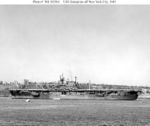
Port side view of Enterprise outside New York City, 1945.
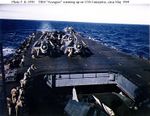
A colorized photo of TBM Avenger torpedo bombers being readied for launch from Enterprise in 1944.
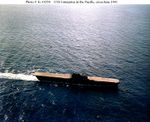
A colorized photo of Enterprise in June of 1941. She is painted in Ms1 camouflage with a natural wood stain for her flight deck.
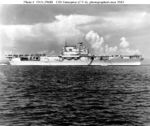
Starboard view of Enterprise in 1940.
_in_Puget_Sound,_September_1945.jpg)
.jpg)
_flight_deck_during_Battle_of_the_Eastern_Solomons,_24_August_1942_(80-G-17489).jpg)


_awaiting_disposal_at_the_New_York_Naval_Shipyard_on_22_June_1958.jpg)


References
- Stille, M., Bryan, T. (2005). US Navy Aircraft Carriers 1922-45: Prewar classes. Oxford, UK: Osprey Publishing Ltd.
- Chesneau, R., Gardiner, R. (1980). Conway’s All the World’s Fighting Ships: 1922-1946. London, UK: Conway Maritime Press.
- https://www.cv6.org/company/airgroups.htm
- https://www.wings-aviation.ch/22-USNavy-Carrier/Fleet-Carrier/CV-06-USS-Enterprise.htm
- Ewing, S. (1982). USS Enterprise (CV-6): The Most Decorated Ship of World War II. Missoula, MT: Pictorial Histories Publishing Company
- https://pacific.valka.cz/forces/tf58.htm
- https://www.cv6.org/1946/1946.htm
| Destroyers | II Sampson • II Smith • III Wickes • IV Clemson • IV DD 214 • V Nicholas • V Hill • VI Farragut • VI Monaghan • VII Mahan • VII Sims • VII Hughes • VII Sims B • VIII Benson • VIII Osborne • VIII Kidd • IX Fletcher • IX Christopher • IX Benham • IX Halford • IX Black B • IX Black • IX Johnston • IX GQ Johnny • IX Frank Friday • X Gearing • X Burrows • X Somers • X Forrest Sherman • X Laffey • X Hull • X [[Ship:[Gearing]|[Gearing]]] • Joshua Humphreys • III Wickes • IV Clemson • IV DD 214 • V Nicholas • V Hill • VI Farragut • VI Monaghan • VII Mahan • VII Sims • VII Hughes • VII Sims B • VIII Benson • VIII Osborne • VIII Kidd • IX Fletcher • IX Christopher • IX Benham • IX Halford • IX Black B • IX Black • IX Johnston • IX GQ Johnny • IX Frank Friday • X Gearing • X Burrows • X Somers • X Forrest Sherman • X Laffey • X Hull • X [[Ship:[Gearing]|[Gearing]]] • Joshua Humphreys
|
| Cruisers | I Erie • II Chester • II Albany • III St. Louis • III Charleston • IV Phoenix • V Omaha • V Marblehead • V Marblehead Lima • V Rattlehead • VI [[Ship:Cleveland (< 31.05.2018)|Cleveland (< 31.05.2018)]] • VI Pensacola • VI Dallas • VII Atlanta • VII [[Ship:Pensacola (< 31.05.2018)|Pensacola (< 31.05.2018)]] • VII New Orleans • VII Helena • VII Indianapolis • VII Atlanta B • VII Boise • VII Flint • VIII [[Ship:New Orleans (< 31.05.2018)|New Orleans (< 31.05.2018)]] • VIII Baltimore • VIII Cleveland • VIII Wichita • VIII Anchorage • VIII Congress • VIII Rochester • VIII San Diego • VIII AL Montpelier • VIII Protector • IX [[Ship:Baltimore (< 31.05.2018)|Baltimore (< 31.05.2018)]] • IX Buffalo • IX Seattle • IX Vallejo • IX Alaska • IX Tulsa • IX Alaska B • IX Cambridge • X Des Moines • X Worcester • X Puerto Rico • X Salem • X Austin • Jacksonville • Annapolis
|
| Battleships | III South Carolina • IV Wyoming • IV Arkansas Beta • V New York • V Oklahoma • V Texas • VI New Mexico • VI Arizona • VI W. Virginia '41 • VII Colorado • VII Florida • VII West Virginia '44 • VII California • VII Colorado 2 • VIII North Carolina • VIII Kansas • VIII Nebraska • VIII Alabama • VIII Massachusetts • VIII Alabama VL • VIII Constellation • VIII Massachusetts B • VIII Alabama ST • VIII Tennessee • VIII North Carolina CLR • VIII Alabama B • VIII Volunteer State • VIII North Carolina 2 • IX Iowa • IX Minnesota • IX Delaware • IX Missouri • IX Kearsarge • IX Illinois • IX Kearsarge B • IX Georgia • IX AL Kearsarge • IX Iowa 2 • X Montana • X Vermont • X Louisiana • X Ohio • X Oregon • X Rhode Island • X Wisconsin • X BA Montana • X [[Ship:[Montana]|[Montana]]] • X Montana 2 • X Utah • Maine
|
| Aircraft Carriers | IV [[Ship:Langley (< 23.01.2019)|Langley (< 23.01.2019)]] • IV Langley • V [[Ship:Bogue (< 23.01.2019)|Bogue (< 23.01.2019)]] • VI [[Ship:Independence (< 23.01.2019)|Independence (< 23.01.2019)]] • VI Independence • VI Ranger • VII [[Ship:Ranger (< 23.01.2019)|Ranger (< 23.01.2019)]] • VII [[Ship:Saipan (< 23.01.2019)|Saipan (< 23.01.2019)]] • VIII [[Ship:Lexington (< 23.01.2019)|Lexington (< 23.01.2019)]] • VIII Yorktown • VIII Lexington • VIII [[Ship:Enterprise (< 23.01.2019)|Enterprise (< 23.01.2019)]] • VIII Enterprise • VIII Saipan • VIII Hornet • VIII Saipan B • VIII AL Hornet • IX [[Ship:Essex (< 23.01.2019)|Essex (< 23.01.2019)]] • X [[Ship:Midway (< 23.01.2019)|Midway (< 23.01.2019)]] • X Essex • X Midway • X Franklin D. Roosevelt • X [[Ship:[Midway]|[Midway]]] • United States
|
| N/A | |
| U.S.A. | IV [[Ship:Langley (< 23.01.2019)|Langley (< 23.01.2019)]] • IV Langley • V [[Ship:Bogue (< 23.01.2019)|Bogue (< 23.01.2019)]] • VI [[Ship:Independence (< 23.01.2019)|Independence (< 23.01.2019)]] • VI Independence • VI Ranger • VII [[Ship:Ranger (< 23.01.2019)|Ranger (< 23.01.2019)]] • VII [[Ship:Saipan (< 23.01.2019)|Saipan (< 23.01.2019)]] • VIII [[Ship:Lexington (< 23.01.2019)|Lexington (< 23.01.2019)]] • VIII Yorktown • VIII Lexington • VIII [[Ship:Enterprise (< 23.01.2019)|Enterprise (< 23.01.2019)]] • VIII Enterprise • VIII Saipan • VIII Hornet • VIII Saipan B • VIII AL Hornet • IX [[Ship:Essex (< 23.01.2019)|Essex (< 23.01.2019)]] • X [[Ship:Midway (< 23.01.2019)|Midway (< 23.01.2019)]] • X Essex • X Midway • X Franklin D. Roosevelt • X [[Ship:[Midway]|[Midway]]] • United States
|
| Commonwealth | |
| N/A | |
| Germany | IV Rhein • VI Weser • VI Erich Loewenhardt • VIII August von Parseval • VIII [[Ship:Graf Zeppelin (< 23.01.2019)|Graf Zeppelin (< 23.01.2019)]] • VIII Graf Zeppelin • VIII Graf Zeppelin B • X Manfred von Richthofen • X Werner Voss • X Max Immelmann • X Otto Lilienthal
|
| U.S.S.R. | IV Komsomolets • VI Serov • VIII Pobeda • VIII Chkalov • VIII Chkalov B • X Admiral Nakhimov • X Admiral Orlov
|
| Italy | VIII Aquila
|
| N/A | |
| Japan | IV [[Ship:Hōshō (< 23.01.2019)|Hōshō (< 23.01.2019)]] • IV Hōshō • V [[Ship:Zuihō (< 23.01.2019)|Zuihō (< 23.01.2019)]] • VI [[Ship:Ryūjō (< 23.01.2019)|Ryūjō (< 23.01.2019)]] • VI Ryūjō • VII [[Ship:Hiryū (< 23.01.2019)|Hiryū (< 23.01.2019)]] • VII [[Ship:Kaga (< 23.01.2019)|Kaga (< 23.01.2019)]] • VIII [[Ship:Shōkaku (< 23.01.2019)|Shōkaku (< 23.01.2019)]] • VIII Shōkaku • VIII Kaga • VIII Kaga B • IX [[Ship:Taihō (< 23.01.2019)|Taihō (< 23.01.2019)]] • X [[Ship:Hakuryū (< 23.01.2019)|Hakuryū (< 23.01.2019)]] • X Hakuryū • X Shinano • X [[Ship:[Hakuryū]|[Hakuryū]]] • Sekiryu
|
| U.K. | IV Hermes • VI Furious • VI Ark Royal • VIII Implacable • VIII Indomitable • VIII Colossus • VIII Theseus • X Audacious • X Malta • X [[Ship:[Audacious]|[Audacious]]] • Eagle
|
| France | VI Béarn
|
| Pan-Asia | VIII Sanzang
|
| N/A |
- Esta página fue modificada por última vez el 25 ago 2017, a las 13:09.
- Esta página se ha visitado 68 veces.
© 2011–2026 Wargaming.net. Todos los derechos reservados.
